Reading the trade relationship
Brazil has no comprehensive U.S. free-trade agreement; tariff relief must be checked against the products and legal instruments actually covered.
Country relationship · South America · Reviewed
A continental-scale relationship spanning trade, energy, climate, and global diplomacy.
Brazil and the U.S. are large, diverse economies with substantial trade and investment. Cooperation in energy, science, and defense coexists with disputes over tariffs, sovereignty, and how each country approaches global institutions and other powers.
Economy
A continental-scale relationship spanning trade, energy, climate, and global diplomacy.
Security
Defense and diplomatic channels: Independent national decisions.
People
Families, learning, travel, and professional connections extend beyond official diplomacy.
Trade figures are dated estimates, not a live counter. All amounts are U.S. dollars.
$135.7bnTwo-way goods and services trade · 2025
Aircraft, energy, agriculture, machinery, and services connect the economies. They are competitors in some agricultural markets and partners in others. Trade negotiations and sector-specific restrictions should be separated from the overall scale of commerce.
Goods only in these bars; services are included in the larger total alongside them. A trade balance alone does not measure the value of a relationship.
| Measure | Amount |
|---|---|
| U.S. goods exports | $54.3bn |
| U.S. goods imports | $39.9bn |
| Goods and services, both directions | $135.7bn |
Country developments · Reviewed
Brazil has no comprehensive U.S. free-trade agreement; tariff relief must be checked against the products and legal instruments actually covered.
Defense contacts and major non-NATO ally status coexist with Brazil’s independent diplomacy. Brazil’s participation in BRICS does not by itself determine every bilateral policy decision.
The ambassador-designate’s U.S. confirmation is separate from Brazilian acceptance. Current embassy leadership should not be inferred from a confirmation tracker alone.
Students, researchers, entrepreneurs, tourists, and diaspora communities form durable connections. Amazon conservation and climate policy also connect civil society, businesses, and subnational governments.
National policies, state-level partnerships, and corporate commitments have different authorities and delivery mechanisms.
Diplomacy, cooperation, disagreements, and decisions to watch in this relationship.
Country developments · Reviewed
Selected milestones that explain the relationship today.
The U.S. establishes relations with independent Brazil.
The dictatorship and the U.S. role in Cold War regional policy remain essential historical context.
The designation creates additional possibilities for defense cooperation without NATO membership.
Country developments · Reviewed
Tariffs depend on the statute and product.
U.S. emergency-authority tariffs ended after the February Supreme Court ruling, but tariffs under other authorities remain. Congressional researchers documented separate Section 301 measures and separate steel-related duties, with product exemptions.
Brazil’s election authorities certify results.
The court declared Lula reelected. The campaign and legal disputes involving the Bolsonaro family affected diplomacy, while the electoral result is set by Brazilian institutions.
Brazil has its own negotiating priorities.
Lula’s government has pursued trade discussions and partnerships without accepting U.S. demands on Brazil’s internal political decisions. The countries are significant trade and investment partners even when their diplomatic positions differ.
Tariffs
USTR announced measures after investigations covering Brazilian trade practices and forced-labor import rules. Products, legal authority and exemptions matter for actual import charges.
Diplomacy
Trump and Lula still had no reported post-election conversation as of Nov 14. Check official readouts for any move toward talks and distinguish acknowledgment of the result from changes in tariff policy.
Follow both governments for a record of any concrete commitment.
The rates in headline announcements do not apply uniformly across goods.
The countries agreed to rules on trade facilitation, regulatory practices and anticorruption without broad tariff elimination.
The White House used emergency tariffs in 2025. After the U.S. court ruling in 2026, other trade statutes became the basis for new or continuing measures.
Gabriel Escobar leads the mission as chargé. Daniel Perez’s Senate confirmation does not establish Brazilian agrément or arrival at post; the acceptance dispute was still reported on November 11.
Key U.S. interlocutors: the officials leading diplomacy, trade, and security coordination. These are selected federal leads, not an exhaustive directory.
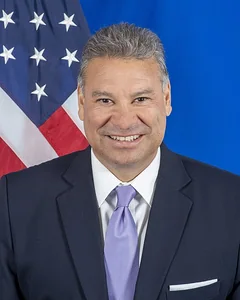
Embassy leadership
Chargé d’affaires, U.S. mission to Brazil
Leads the U.S. mission’s diplomatic engagement with Brazil. The mission coordinates U.S. agency work and maintains the local diplomatic channel.
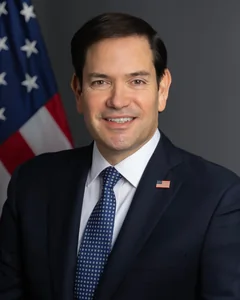
Diplomacy
Secretary of State
Leads State Department diplomacy and the senior political relationship. Embassy and consular work sit within this diplomatic chain.
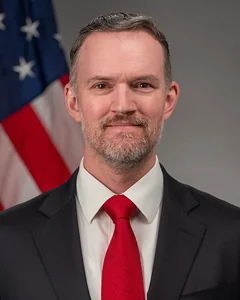
Trade negotiations
U.S. Trade Representative
Leads U.S. trade policy and negotiations. Trade preferences, treaty implementation, and market-access questions are distinct from immigration and consular decisions.
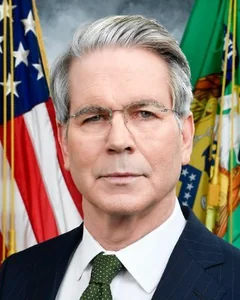
Finance & sanctions
Secretary of the Treasury
Leads Treasury’s financial diplomacy and administration of sanctions through OFAC. Sanctions authorizations, financial arrangements, and trade-agreement rules are different legal instruments.
Senate confirmation authorizes an appointment; it is not a swearing-in date. Swearing in marks the oath of office. An ambassador's presentation of credentials is a separate step with the receiving government. Each date above is labeled for the event the source verifies. The officials and roles were reviewed on Nov 17, 2026 and may change.

