Reading the trade relationship
Trade-preference eligibility and renewal dates must be checked against current law; historical program names do not establish current benefits.
Country relationship · Caribbean · Reviewed
A relationship dominated by civilian security, political legitimacy, and humanitarian needs.
Haiti’s relationship with the U.S. combines international security support, humanitarian assistance, diaspora ties, and trade. The roles of Haitian institutions, the UN-authorized mission, other deployments, and private security actors must remain distinct.
Economy
A relationship dominated by civilian security, political legitimacy, and humanitarian needs.
Security
Haitian institutions and international support: Distinct mandates and accountability.
People
Families, learning, travel, and professional connections extend beyond official diplomacy.
Trade figures are dated estimates, not a live counter. All amounts are U.S. dollars.
$2.3bnTwo-way goods and services trade · 2025
Apparel exports, imported essentials, remittances, and diaspora business connect the economies. Violence can disrupt factories, roads, ports, and services, making operational access as important as a tariff rule.
Goods only in these bars; services are included in the larger total alongside them. A trade balance alone does not measure the value of a relationship.
| Measure | Amount |
|---|---|
| U.S. goods exports | $1.3bn |
| U.S. goods imports | $535.7m |
| Goods and services, both directions | $2.3bn |
Country developments · Reviewed
Trade-preference eligibility and renewal dates must be checked against current law; historical program names do not establish current benefits.
Haitian police and authorities operate alongside international security support. The mandate, resources, accountability, and coordination of each force affect civilian protection.
A UN authorization, troops pledged, troops deployed, and improved security are different milestones.
Haitian communities in the U.S. maintain family, financial, and cultural ties. Displacement, documentation, access to services, and U.S. immigration decisions can affect families independently of high-level diplomacy.
Humanitarian need does not itself determine an individual’s immigration status or eligibility for a particular program.
Diplomacy, cooperation, disagreements, and decisions to watch in this relationship.
Country developments · Reviewed
Reviewed Nov 17, 2026
The revised calendar targets a first round on July 18, 2027. A target date is not a guarantee that security and electoral conditions will be met.
Keep the UN-authorized mission, other foreign deployments, Haitian police, and private security actors distinct when explaining responsibilities and accountability.
Selected milestones that explain the relationship today.
Haiti becomes independent after the revolution against slavery and colonial rule.
Washington recognizes Haiti’s independence, decades after 1804.
The occupation remains essential context for sovereignty and external intervention.
International intervention restores the elected president, adding another major episode to the relationship.
Country developments · Reviewed
A multinational force under a UN mandate
The Security Council extended the force’s mandate through March 31, 2027. The force supports Haitian efforts against armed gangs, relying on contributing governments for personnel and resources.
Support for the force
The UN Support Office provides logistical and administrative support. The separate UN political mission, BINUH, reports on human rights and works on political issues.
Election calendar and civilian authority
Prime Minister Alix Didier Fils-Aimé leads the government after the transitional council’s mandate expired. The Provisional Electoral Council set July 18, 2027 for the first presidential and legislative rounds.
United Nations
The United States and Panama submitted the draft the Security Council adopted. The resolution authorizes the mission and support office. Contributors and Haitian authorities carry it out.
Accountability
Public UN reports identify where violence persists and how the force is being supported. The U.S. can influence the mandate and ask for reporting, while Haiti’s electoral authorities control the calendar.
The revised date replaces the December 2026 plan. Review new electoral council notices before treating the schedule as settled.
A mandate date is separate from actual deployment and local security outcomes.
The transitional council selected a prime minister and later transferred executive authority to Fils-Aimé when its mandate expired.
The Security Council authorized the Gang Suppression Force and the support office in 2025, then extended their mandates in September 2026.
An acting chief of mission is not a Senate-confirmed ambassador.
Key U.S. interlocutors: the officials leading diplomacy, trade, and security coordination. These are selected federal leads, not an exhaustive directory.
Embassy leadership
Chargé d’affaires, U.S. mission to Haiti
Leads the U.S. mission’s diplomatic engagement with Haiti. The mission coordinates U.S. agency work and maintains the local diplomatic channel.
The cited report identifies him in office by August 5; it does not establish the exact appointment date.
A reusable portrait has not been verified. Identity and role are documented in the linked source.
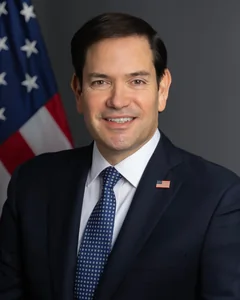
Diplomacy
Secretary of State
Leads State Department diplomacy and the senior political relationship. Embassy and consular work sit within this diplomatic chain.
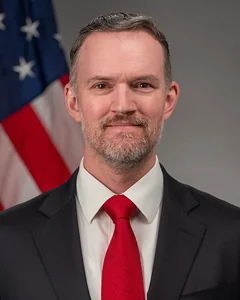
Trade negotiations
U.S. Trade Representative
Leads U.S. trade policy and negotiations. Trade preferences, treaty implementation, and market-access questions are distinct from immigration and consular decisions.
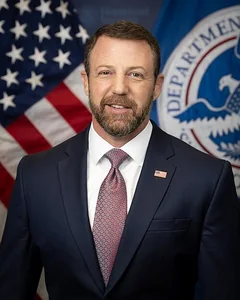
Border coordination
Secretary of Homeland Security
Oversees U.S. customs, border, and immigration agencies. These U.S. responsibilities do not give DHS authority over Haiti’s domestic institutions.
Senate confirmation authorizes an appointment; it is not a swearing-in date. Swearing in marks the oath of office. An ambassador's presentation of credentials is a separate step with the receiving government. Each date above is labeled for the event the source verifies. The officials and roles were reviewed on Nov 17, 2026 and may change.